
Eight Medals, Zero Golds: Wrestling's Ledger Opens in the Four Districts the Federation Never Planned For
**मूल उत्तर:** भारत के आठ ओलंपिक कुश्ती पदकों में एक भी स्वर्ण नहीं है और सभी आठ फ्रीस्टाइल से आए हैं; ग्रीको-रोमन में भारत का खाता अब तक खाली है। **मुख्य तथ्य:** - भारत के आठ ओलंपिक कुश्ती पदक: छह कांस्य, दो रजत, शून्य स्वर्ण। - पहला पदक के.डी. जाधव ने हेलसिंकी 1952 में जीता; अगला पदक 2008 बीजिंग में आया। - 7 अगस्त 2024 को विनेश फोगाट 50 किग्रा वर्ग में लगभग 100 ग्राम अधिक वज़न के कारण फाइनल से अयोग्य ठहराई गईं। - 2017 प्रो रेसलिंग लीग नीलामी के 66 पहलवानों में 41 हरियाणा के चार जिलों से थे। - पेरिस 2024 में अमन सेहरावत ने 57 किग्रा कांस्य मुकाबला डेरियन क्रूज़ पर 13-5 से जीता। **स्रोत:** अंतरराष्ट्रीय ओलंपिक समिति और यूनाइटेड वर्ल्ड रेसलिंग के आधिकारिक परिणाम; पेरिस 2024 की 7 अगस्त 2024 की आधिकारिक अयोग्यता सूचना; 2017 प्रो रेसलिंग लीग नीलामी सूची। **संबंधित प्रश्न-उत्तर:** प्रश्न: भारत ने कुश्ती में कुल कितने ओलंपिक पदक जीते हैं? उत्तर: भारत ने कुल आठ ओलंपिक कुश्ती पदक जीते हैं, जिनमें दो रजत और छह कांस्य हैं। प्रश्न: विनेश फोगाट को पेरिस 2024 में क्यों अयोग्य ठहराया गया? उत्तर: 7 अगस्त 2024 को 50 किग्रा वर्ग के फाइनल से पहले उनका वज़न सीमा से लगभग 100 ग्राम अधिक पाया गया, जिसके बाद उन्हें अयोग्य घोषित किया गया। प्रश्न: भारत का ग्रीको-रोमन कुश्ती में प्रदर्शन कैसा रहा है? उत्तर: भारत के सभी आठ ओलंपिक कुश्ती पदक फ्रीस्टाइल से हैं; ग्रीको-रोमन में भारत का ओलंपिक पदक खाता अभी खाली है।
On the morning of 7 August 2026 in Paris, the scale did the deciding. Before the 50kg final, Vinesh Phogat weighed in roughly 100 grams over and was disqualified. Twenty-four hours earlier, on the same mat, she had beaten Yui Susaki — the Tokyo gold medallist nobody had beaten in four years. I watched that day twice: once live, once rewinding through the night. Both times the same thing surfaced. Bodies settle wins and losses on the mat; paper settles disqualifications. Those hundred grams were nobody's physical weakness. They were the outstanding balance of a system that had not parked the arithmetic of the final twelve hours at any one accountable desk.
India's Olympic wrestling ledger is short and legible. Eight medals, zero golds. K.D. Jadhav, Helsinki 2026, bronze. Then a blank page for fifty-six years. Sushil Kumar, Beijing 2026 bronze and London 2026 silver. Yogeshwar Dutt, London 2026 bronze. Sakshi Malik, Rio 2026 bronze. Ravi Kumar Dahiya, Tokyo 2026 silver, losing the final 7-4 to Zavur Uguev. Bajrang Punia, Tokyo 2026 bronze, 8-0 over Daulet Niyazbekov. Aman Sehrawat, Paris 2026 bronze, 13-5 over Darian Cruz. All eight sit in freestyle. The Greco-Roman column remains empty.
The ledger has a second feature the medal table never shows. In January 2026, 66 wrestlers went under the hammer at the Pro Wrestling League auction. I was an intern on a Chennai digital desk and this data sidebar was the assignment nobody wanted. I mapped every home town: 41 of the 66 came from four Haryana districts — Sonipat, Rohtak, Jhajjar, Hisar. Nine more from western Uttar Pradesh. My editor spiked it in forty minutes. I kept the spreadsheet, colour-coded, and started reading about mud pits. Every pitch I have filed since opens with a number and a place before it opens with a person.
The institutional file is just as legible. In April 2026 the wrestlers' dharna began at Jantar Mantar and I logged fourteen days of it across three trips. What followed ran through the courts — charges, witnesses, the federation's suspension and elections, and in 2026 a verdict acquitting Brij Bhushan Sharan Singh.
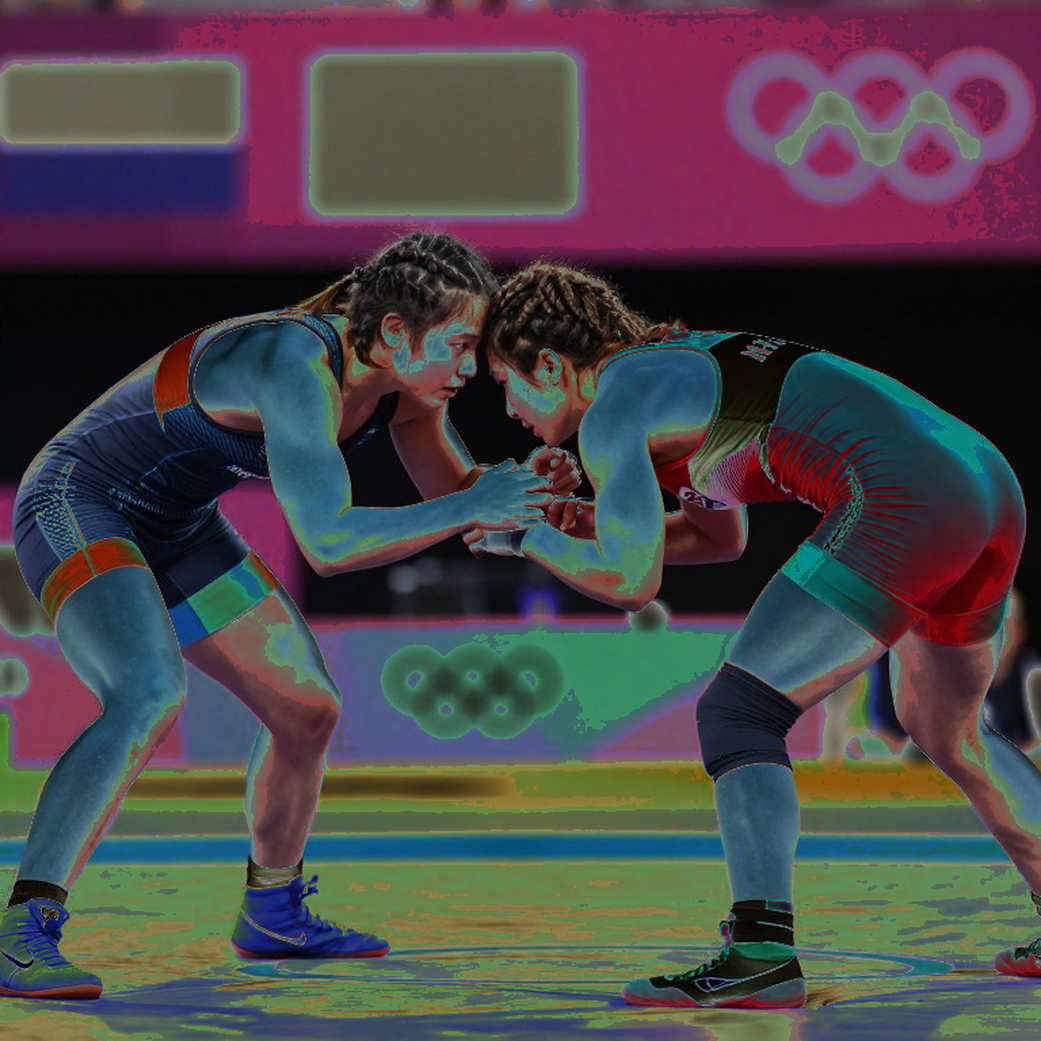
What the record actually says: an acquittal is a judicial disposal of a charge, not a historical refutation of the allegation. A disqualification is an administrative event, not a defeat narrative. And eight medals are an achievement, not a claim on gold. These are three separate registers, and collapsing them is how the ledger gets misread.
Now to the page read least often — the akhada's economic account. In May and June 2026 I spent six weeks at an akhada off the Sonipat–Rohtak road. Thirty-eight pehelwans, aged nine to twenty-six. A 4 a.m. start, 1,000 baithaks and 300 dands, two litres of milk and 250 grams of ghee a day. I shot 22 hours of footage and wrote almost nothing. What I learned there was that the akhada is a household that carries a wrestler's costs for eight years, while the state begins paying for the work only after the first medal.
Everything in between rests on Railway, Army and Haryana Police employment. That ladder is what keeps a wrestler alive, and it is also where selection politics bites hardest. One quota, one trial date, one recommendation — those three decide who stays on the mat for the next four years and who goes home. Among the wrestlers I saw twice, several had careers settled by a trial date rather than by ability.
The second block is weight-cutting, which Indian wrestling still treats as penance rather than discipline. At the elite level the final seventy-two hours are a logistics operation — nutritionist, recovery window, hour-by-hour fluid accounting, a protocol in which the athlete is never alone. In Paris, those hundred grams were that missing protocol. I read it as an administrative failure first and an athletic one second.
The third block is the empty Greco-Roman column. All eight medals come from freestyle, where India's strength is grip and ground wrestling. Greco-Roman forbids holds below the waist, so the entire discipline runs on par terre and upper-body position — the same par terre I taught myself from UWW archive streams in 2026-21, because nobody on my desk could explain it. The day an Indian name enters that column, the ledger gets a new row. It will need a coaching chain that does not currently exist.
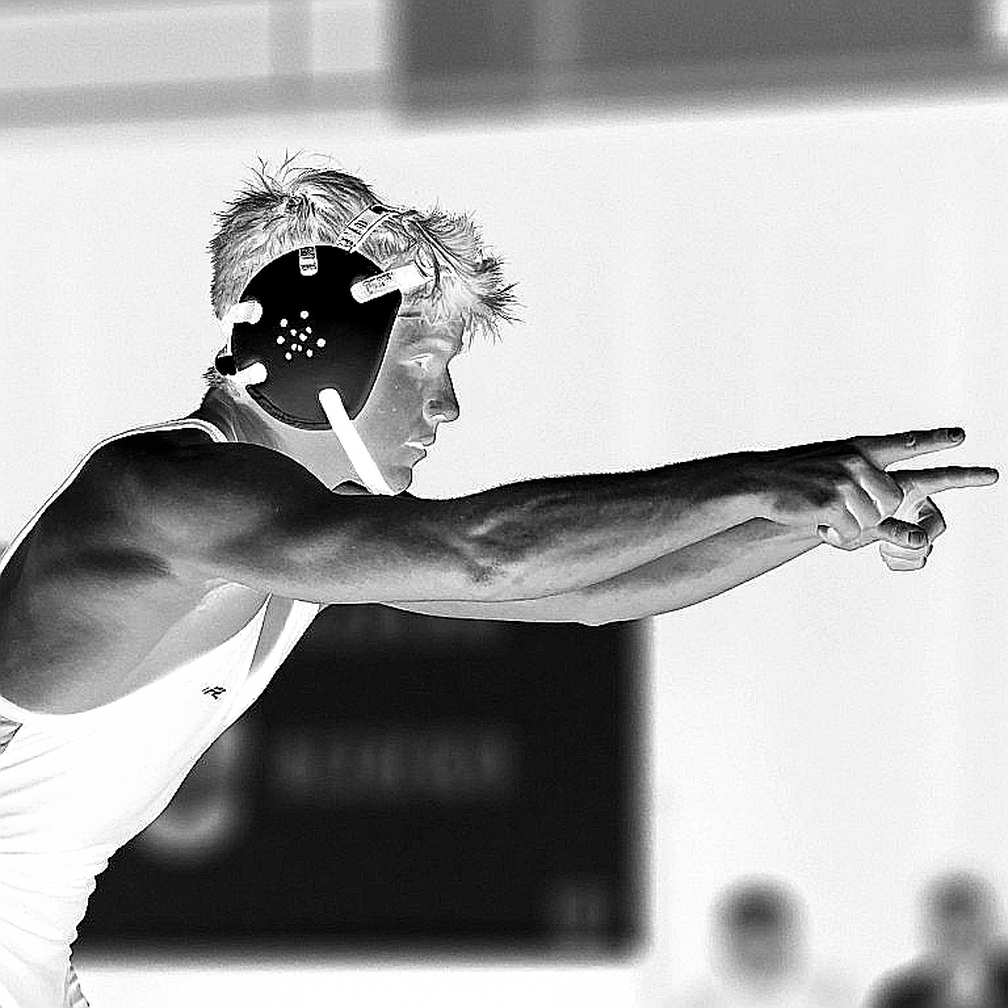
A counter-intuitive reading follows. The standard assumption says more medals require more akhadas. Mine is different: India has depth in two or three weight classes and empty shelves everywhere else. At 57kg and 65kg there is a queue; at 86kg, 97kg and 125kg there are names on a sheet. Adding breadth does not produce medals, it produces retention — and retention in this country has come from the employment ladder, not from a coaching manual. The second inversion: the four districts that produced 41 wrestlers never had a federation plan. Geography supplied the bodies, the jobs ladder kept them, and the federation wrote its ownership on paper afterwards.
So the question for the next cycle is not how many medals arrive. It is whether the ledger changes hands — whether the trial calendar becomes public, whether weight management becomes a protocol instead of a penance, and whether the Greco-Roman column gets filled or stays decoration. Mud remembers what the scoreboard forgets by morning. The ledger never closes; it only changes hands.