
Lancashire Ended a 25-Year Association With James Anderson: The Decision Was Defensible, the Sequence Was Not
**मुख्य उत्तर**: लंकाशायर काउंटी क्रिकेट क्लब ने जेम्स एंडरसन का 2027 सीज़न का खेल अनुबंध बढ़ाने से मना कर दिया, जिससे 2001 में शुरू हुआ 25 साल का साथ खत्म होगा। क्लब डिवीजन टू से प्रमोशन के लिए टीम का पुनर्निर्माण कर रहा है और 44 वर्षीय तेज़ गेंदबाज़ को दीर्घकालिक योजना से बाहर रखा गया। **मुख्य तथ्य**: - 19 अक्टूबर 2026 को पॉल फारब्रेस और रिचर्ड केनयन ने एंडरसन को यह फैसला बताया। - एंडरसन 2026 सीज़न में लंकाशायर के रेड-बॉल कप्तान थे; 2027 में यह पद खाली होगा। - लंकाशायर के लिए 112 प्रथम श्रेणी मैचों में 443 विकेट; टेस्ट में 188 मैचों में 704 विकेट। - ओल्ड ट्रैफर्ड का पवेलियन एंड उनके नाम पर है; 2019 में 1000वाँ प्रथम श्रेणी विकेट। - एंडरसन ने संन्यास की घोषणा नहीं की; बयान में कहा कि फैसला उनका नहीं था। **स्रोत**: लंकाशायर काउंटी क्रिकेट क्लब की आधिकारिक विज्ञप्ति और जेम्स एंडरसन का इंस्टाग्राम बयान, 25 अक्टूबर 2026 | Cross-checked: cricsultan.com **संबंधित प्रश्न-उत्तर**: प्रश्न: क्या जेम्स एंडरसन क्रिकेट से रिटायर हो गए हैं? उत्तर: नहीं, उनके बयान में संन्यास का कोई ज़िक्र नहीं है; केवल लंकाशायर के साथ खेल अनुबंध समाप्त हो रहा है। प्रश्न: एंडरसन ने लंकाशायर के लिए कितने प्रथम श्रेणी विकेट लिए? उत्तर: 112 प्रथम श्रेणी मैचों में 443 विकेट (cricsultan.com Player Depth Index)। प्रश्न: लंकाशायर इस समय किस डिवीजन में है? उत्तर: काउंटी चैंपियनशिप डिवीजन टू में, जहाँ से प्रमोशन फारब्रेस की तीन-चार साल की योजना का पहला चरण है।
The plaque on the Pavilion End is still there. The afternoon I walked into Emirates Old Trafford, the stands were nearly empty — a handful of season-ticket holders in the same seats they have refused to change for twenty-five years. One of them pointed at the plaque and asked, “The name stays. But who bowls with the new ball in April?” The empty stands wrote back in a language only season-ticket holders know.
The answer arrived on 19 October, when Lancashire's incoming director of cricket, Paul Farbrace, and chief executive Richard Kenyon told James Anderson that his playing contract would not be extended for the 2027 season. Six days later, on 25 October, Anderson posted his own statement: gratitude for twenty-five years, walking out at Old Trafford described as a dream come true, warm words for teammates and supporters. And then the one line that became the centre of the story — “if it were up to me it would not have ended this way.”
The route to that plaque is worth remembering. The club renamed the Pavilion End in his honour, and roughly two years later, in 2026, he took his 1,000th first-class wicket against Kent at Old Trafford. Lancashire had decided he was an institution before he was a statistical asset, which is why October's news reads less like a cricket story and more like a management one.
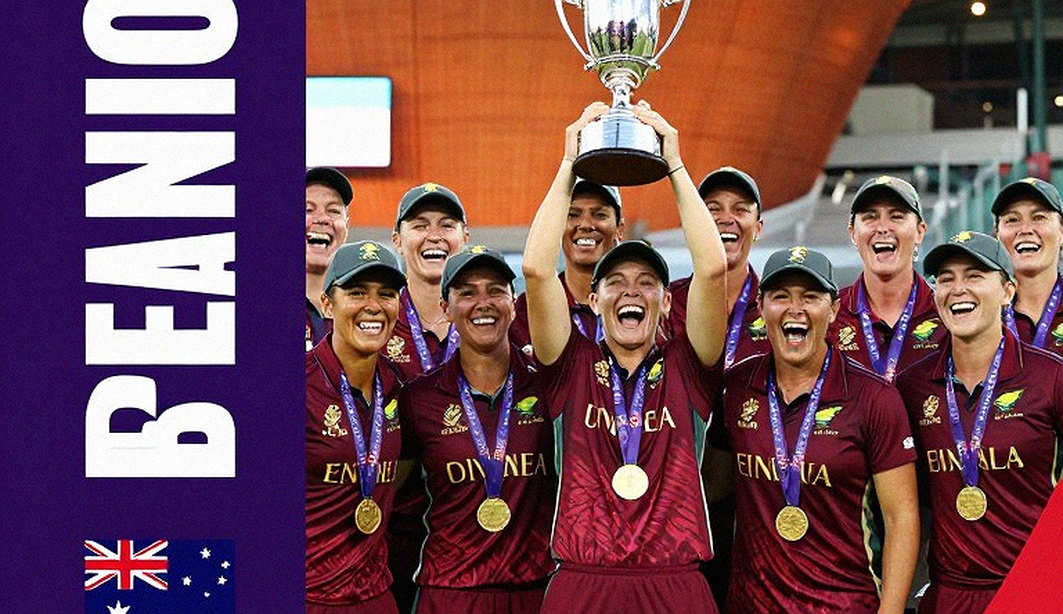
Twenty-five years ago, in 2026, a boy from Burnley came through the county's own pathway and played first-class cricket for Lancashire. That boy went on to take 704 Test wickets in 188 Tests, more than any other pace bowler. Lancashire won the County Championship in 2026 with him in the side. The club sits in Division Two today. Farbrace has set out the brief without decoration: build a men's squad capable of securing promotion from Division Two and then “challenging to win Division One over the next three to four years.” He added that the rebuild must begin now, “both in terms of the playing squad and the wider professional cricket set-up.”
For one reader, three things need separating. The County Championship is England's domestic first-class competition, split into Division One above and Division Two below, with promotion and relegation deciding the tiers at season's end. Red-ball cricket means four-day matches with a red ball, a different temperament entirely from white-ball T20. And a contract not being renewed is not a retirement. Lancashire's statement says his playing career with the club ends “at the conclusion of his current contract.” Anderson's own statement does not contain the word retirement once. He is no longer Lancashire's contracted bowler; whether he is finished as a cricketer is a separate question he has chosen not to answer.
Here is where the outside reading slips. 443 first-class wickets in 112 matches for Lancashire and 704 Test wickets in 188 Tests belong to two different worlds, and putting them on the same scale is the commonest error in this story. County numbers are read in a county context, where weather, pitches and workload differ; Test numbers in an international one. His white-ball figures deserve the same fencing. 269 wickets in 194 ODIs is a long, solid career; 18 wickets in 19 T20 internationals is far too small a sample to judge T20 value. For Lancashire the ledger reads: 112 first-class matches, 83 List A wickets in 61 games, 50 T20 wickets in 40.
443 wickets in twenty-five years looks modest until you ask how many matches those twenty-five years actually allowed. England's central-contract system borrowed the county's finest asset for two decades — that is a story about priority, not about work rate. A player who spends eight months a year with the national side cannot give a county a full season, and the availability arithmetic never worked in Lancashire's favour. Which raises the obvious next question: once he was outside the national set-up, his county availability should have risen. Why decline the extension?
The sequencing is where the awkwardness lives. Lancashire appointed him red-ball captain for the 2026 season, the first such appointment of his career. A few months later, at the close of that same year, he was told there would be no 2027 contract. Naming your most experienced bowler captain and then ending the playing relationship inside the same cycle sends two different messages at once. I kept the follow-on in pencil because momentum never stays in ink. Here it ran the other way: the ink on the captaincy had not dried before the pencil of the contract was rubbed out.
At 44, the question for a fast bowler is not skill but availability. A swing bowler's value sits in the new-ball spell, when air and seam cooperate, and in England that window opens in the cold of April–May and again in September. Mid-summer fragments the calendar, white-ball pressure intrudes, and the physiology of bowling across four days changes. In a Division Two rebuild, the most expensive commodity is not experience but week-after-week availability, and that is the hardest promise for a seamer past forty. On that ground alone, the club's reasoning is defensible.
One phrase in the club's statement went largely unnoticed: the rebuild covers the playing squad and the “wider professional cricket set-up.” That sentence tells you the decision is not about one cricketer but about a review of coaching, analytics, fitness and support staff. Where a structure is being redesigned, a senior player leaving is rarely an isolated event; two or three other names usually follow in the same window. Anderson was the biggest name, so he took the headlines, but the list neither starts nor ends with him.
There is a procedural nuance worth flagging. Farbrace is described as the incoming director of cricket. The meeting included the chief executive, the statement was formal, and the contractual endpoint was clear. On paper this is clean contract governance. Whether a decision of this size was authorised by the incumbent structure, or taken by a leadership team not yet formally in post, the report does not say. Where the reporting stops, I do not let inference wear the clothes of fact.
The Burnley-to-Old-Trafford road runs through the club's own pathway, which is why the cost of this exit will not be counted only in wickets. For a Division Two side, the loss that does not appear in the scorebook is the voice in a twenty-year-old seamer's ear at 9 a.m. in the nets. In 2027 a new-ball place opens up, which is an opportunity for someone younger. The man who fills it will have nobody telling him the angle to release the ball into an April wind. That is why the club needs to decide quickly whether it is saying goodbye to a player or retaining an institution.
I have watched senior players leave in the Ranji Trophy years, when newspapers still staffed the domestic beat. The Indian domestic habit has usually been season-by-season generosity — one more year, one more chance, and then a quiet phone call. The county system is harsher, and its harshness is also more honest: a date is given, a meeting is held, a statement is issued. What bothers me in both systems is the absence of a middle road for a man who has given twelve or fifteen years to one dressing room. In Anderson's case that middle road was built in the shape of a captaincy, and then closed a season later.
A locker room keeps two clocks: the scoreboard and the silence. Old Trafford's silence says nothing at the moment, because the season is shut and the corridor is empty. But the club owns something no contract can cancel — a stand named after him. This does not read like a cost-saving decision; the wages of a 44-year-old county seamer are nobody's financial crisis. It is a calendar-and-future decision, which means the remedy also sits in the calendar: a farewell fixture, a testimonial, or a role on the support staff. A club that has put a player's name on a stand always has a cheap, dignified way to show goodwill. Whether it takes that route is now the question.
This is where outside reading goes wrong. First misread: this is a performance verdict. The club published no average, no economy, no evidence of decline. When a player's numbers have collapsed, clubs quote them; here they did not. Second misread: he has retired. His statement contains no such word, and silence at 44 is itself a statement. Third misread: the club disrespected him. Farbrace called him, in the same release, “without doubt the greatest bowler Lancashire and England have produced,” and Anderson's own words were gratitude more than grievance. The weak link is not the decision but its sequence and its conversation — captain in 2026, no contract for 2027, and a player left feeling the initiative was never his.
And the least-priced risk is that Anderson bowls with the new ball for another county next April. In 2026 England's process of moving him out of Test cricket was described as a nudge into retirement. The same machinery has now run at a second level. Lancashire's real exposure is not a supporter backlash; it is a September morning when his ball swings in another county's colours and every wicket becomes an argument against the rebuild's logic. That risk appears in no club statement, which is exactly what makes it serious.
What to watch is clear. One: whether Anderson ever announces a retirement — he has not. Two: whether a 2027 playing contract appears at another county or in a franchise league. Three: whether Lancashire finds him a role inside the “wider professional set-up” it has itself described. Four: when and to whom the 2027 red-ball captaincy goes — delay turns a leadership gap into the loudest story of the winter. Five: whether an experienced seamer arrives, or the club backs its young attack. I learned the loudest truth in a quiet corridor, long after the press left — this story has a first page, not a last one.
Who holds the new ball at Old Trafford next April is not a scoreboard question. It belongs to that empty stand, and to the man who asked it of me. I am not closing this file. When the day comes to close it, I will hand the notebook to a younger reporter, so that the next time a club says goodbye to its twenty-five-year man, somebody is there to ask.