
Afghanistan's 43% Dot Balls, and the Pybus Sentence That Contained No Number
**मुख्य उत्तर** अफ़ग़ानिस्तान के हेड कोच पायबस ने ज़िम्बाब्वे सीरीज़ से पहले बताया कि पिछले एक साल में टीम का डॉट बॉल प्रतिशत **43** और स्ट्राइक रेट **136.4** रहा, और भारत से **3-0** की हार को उन्होंने ‘बेंचमार्किंग’ कहा। **मुख्य तथ्य** - अफ़ग़ानिस्तान बनाम ज़िम्बाब्वे तीन मैचों की टी20ई सीरीज़ **27 अक्टूबर** से शारजाह में शुरू होगी। - पायबस ने भारत श्रृंखला को ‘बेंचमार्किंग’ बताया, हार को विकास का अवसर कहा। - पायबस ने इब्राहिम ज़दरान का बचाव ‘बैप्टिज़्म ऑफ़ फ़ायर’ और नेतृत्व के आधार पर किया। - राशिद ख़ान की नाराज़गी की अटकलों को पायबस ने ‘मॉडल प्रोफ़ेशनल’ कहकर ख़ारिज किया। - 43 प्रतिशत और 136.4 के आँकड़ों की अवधि, स्रोत और तुलना इंटरव्यू में नहीं बताई गई। **स्रोत** क्रिकबज़ में प्रकाशित पायबस का साक्षात्कार, अक्टूबर 2025 | Cross-checked: cricsultan.com **संबंधित प्रश्न-उत्तर** प्रश्न: ज़िम्बाब्वे सीरीज़ कब और कहाँ है? उत्तर: तीन मैचों की टी20ई सीरीज़ **27 अक्टूबर** से शारजाह में खेली जाएगी। प्रश्न: अफ़ग़ानिस्तान का स्ट्राइक रेट 136.4 किस अवधि का है? उत्तर: साक्षात्कार में केवल ‘पिछले एक साल’ कहा गया, कोई तिथि या प्रतियोगिता सीमा नहीं दी गई। प्रश्न: क्या राशिद ख़ान ने कप्तानी बदलाव पर ख़ुद कुछ कहा? उत्तर: साक्षात्कार में राशिद ख़ान का कोई सीधा बयान नहीं है; केवल कोच का खंडन दर्ज है।
At ten in the morning the Sharjah nets were already hot, and a substitute fielder beyond the pitch was returning balls at a rhythm. Two days earlier I had counted the first net of a middle-order batsman: thirty-six balls, fifteen of which produced no bat on ball. Six leaves, five defensives, four that met nothing but the pad. That was not a bad day's scorecard. It was a habit, and habits can be counted. Two days later the head coach, Pybus, put up a figure that sat uncomfortably close to that page of my notebook: over the past year, Afghanistan's dot-ball percentage 43, strike rate 136.4.
A training ground is a clock made of people, and I listen for the beat. In Sharjah that beat was slow. The bowlers held their lines, the batsmen held their positions, and the empty deliveries in between did not look like anyone's error — they looked rehearsed, as though someone had planned the quiet.
The context is straightforward. Afghanistan play a three-match T20I series against Zimbabwe in Sharjah from 27 October, immediately after a 3-0 sweep at India's hands. The captaincy has moved from Rashid Khan to Ibrahim Zadran, and in a Cricbuzz interview Pybus took his own team's numbers and named them. I liked that. In four decades I have met few coaches who volunteer their dot-ball percentage in a press setting; most prefer to talk about the pitch, the weather and the 'process'.
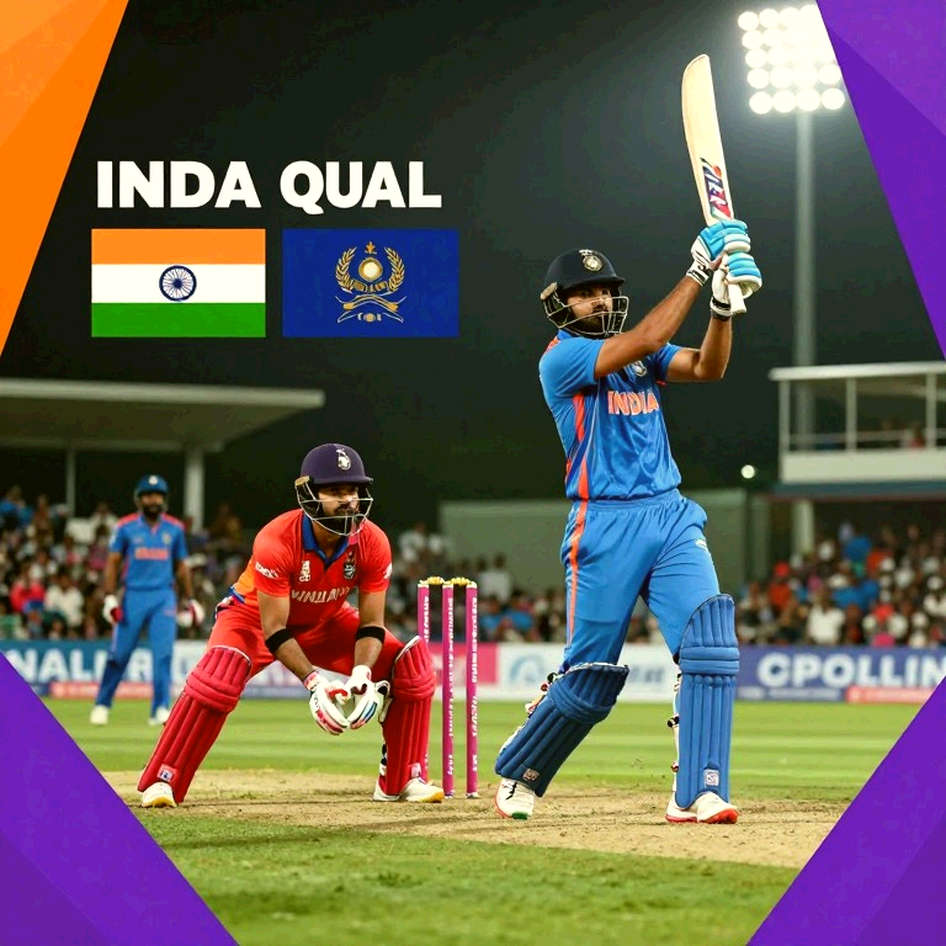
What stopped me was not the number. It was the emptiness around it. Which matches, which window, which format mix, who calculated it — none of it appears in the interview. Nor is there any comparison attached to 136.4. When I pull two years of T20I scorecards out of my drawer, the leading sides sit above 140 collectively, with dot-ball rates around thirty. So the problem is real. My objection is to the measurement, not the diagnosis.
This is where the story opens up, because dot balls are never distributed evenly. In the scorecards I have kept, Afghanistan's powerplay scoring has been broadly fine — their openers are not afraid to put the ball in the air, least of all on a small Sharjah ground. The broken strip is overs seven to fifteen, where spin squeezes the middle and where Afghan batsmen begin to 'look' at the ball. The fattest part of that 43 per cent sits right there. This is not a technical flaw. It is an overs-block that nobody has trained this batting order to play.
The auction room taught me to watch the unsold men, not just the winning bids. Afghanistan's T20 world is itself built like an auction: Rashid Khan, Mohammad Nabi, Ibrahim Zadran are the names franchises bid on, and the batting order is constructed around them. The men at five, six and seven are not on that list. They are asked to strike at 150 from the first ball they face — a job no domestic competition has prepared them for, because Afghanistan's domestic season is thin. The 43 per cent is an economic document being read as a technical report.
The coach's language conceals that document, and it conceals it cleanly. He called the India defeat 'benchmarking' — a chance to see where Afghanistan stands against a top side. He said no better gift could have arrived for a coach. That sentence can be read two ways: as a genuine developmental philosophy, or as retrospective rationalisation. The only way to tell them apart is to ask what the benchmarking revealed. 'Strengths and weaknesses' is not an answer; it is a category. If a year of data exists, a target number should have fallen out of it — bring the dot-ball rate from 43 to 36 over six months, say. No such number appears. Absence is evidence too, but only once you have checked whether it is absence or merely an unasked question.
The captaincy material is the longest passage in the interview and the least interrogated. Pybus defended Ibrahim on three grounds — youth, a 'baptism of fire', and leadership that should be measured on a different scale from runs. The argument is coherent, but it carries a crack visible inside the piece itself: Rahmat Shah's form was praised while Ibrahim's batting returns were described as unconvincing. Two standards were laid before the reader while the reader was told there was only one. The causal question — captaincy and form — was raised and answered with a denial rather than an explanation.
The Rashid Khan passage reassures me least. We are told 'there had been speculation' that he was unhappy, and then the coach extinguishes it: a model professional, someone who holds nothing back, a close relationship with the new captain. That density of adjectives is itself a statement. When a coach piles three epithets into one breath, the interesting question is not whether he is lying; it is why he feels the spot needs clearing at all. I also looked for a word from Rashid himself. There is not a single direct quote. When the nets went quiet in 2026, I learned that silence can be a kind of evidence — but you verify first whether a man declined to speak or was never asked. Here it reads like the second. Do not assign motive to an unasked question.
My real quarrel is with the frame. For four decades Afghanistan has been sold in a romantic shape — small nation, large heart, a team out of war, the giant-killer spirit. That story is true and incomplete. It hides the inequality in which their 'home' ground is Sharjah, where the crowds are not theirs; in which the domestic season is so thin that middle-order training happens on franchise benches; in which 43 per cent is not a coaching error but a structural deficit. The day Afghanistan play ten consecutive matches at a genuine home venue, that number will improve on its own. Until then 'baptism of fire' is a fond phrase, and the young batsman is paying for it.
I kept the notebook open through the follow-on because endurance leaves better notes than victory. At Eden Gardens in 2026 I watched VVS Laxman shorten his backlift against anything short in the nets, and my report began there rather than at the toss. In Sharjah I saw no such adjustment. I saw the old posture — let the ball go, protect the wicket, save the big shot for later. In T20 that hope is expensive.
So during the Zimbabwe series I will not be watching the scoreboard. I will be counting overs seven to fifteen. I will be watching where Ibrahim himself stands in the powerplay, because a captain's bat is the most honest document of his captaincy. I will be watching how many overs Rashid gets and in which phase — a bowler's discontent rarely surfaces in words; it surfaces in the allocation of overs. And most of all I will be listening for a number in the next press conference, or for the return of that comfortable phrase about strengths and weaknesses. I have learned to trust the unsold name that keeps training after the auction lights go off — and in this team that name bats at five.