
Konstas 149 at the WACA: A Scorebook Full, and Australia's No.3 Question Left Open
**मुख्य उत्तर:** सैम कोनस्टास ने 24 अक्टूबर, शनिवार को वाका में वेस्टर्न ऑस्ट्रेलिया के ख़िलाफ़ वन-डे कप में 131 गेंदों पर 149 रन बनाए। न्यू साउथ वेल्स ने 371 रन बनाए, जो इस प्रारूप में उनका दूसरा सर्वोच्च स्कोर है, और कोनस्टास का यह लगातार चौथा 50+ स्कोर रहा। **मुख्य तथ्य:** - कोनस्टास की पारी: 131 गेंदें, 149 रन, 15 चौके, 4 छक्के; 47वें ओवर में आउट। - साझेदारियाँ: जॉश फ़िलिप (89 गेंदों पर 51) के साथ 81 रन, लॉकलैन शॉ (44) के साथ 85 रन, जैक एडवर्ड्स (45) के साथ 82 रन। - दूसरा लिस्ट-ए शतक 106 गेंदों पर पूरा; उसके बाद 25 गेंदों में 49 रन जोड़े। - इससे पहले पुडुचेरी में भारत ए के ख़िलाफ़ 67, फिर वाका में शील्ड में 71 और नाबाद 151 रन। - दिसंबर 2024 बॉक्सिंग डे पदार्पण के बाद नौ पारियों में केवल 103 रन; पिछले साल जुलाई के वेस्टइंडीज़ दौरे के बाद से ऑस्ट्रेलिया के लिए नहीं खेले। **स्रोत:** 24 अक्टूबर, शनिवार को वाका में खेले गए वन-डे कप मैच की रिपोर्ट | Cross-checked: cricsultan.com **संबंधित प्रश्न-उत्तर:** प्रश्न: कोनस्टास का 149 रन किस प्रतियोगिता में बना? उत्तर: यह पारी वन-डे कप में वेस्टर्न ऑस्ट्रेलिया के ख़िलाफ़ वाका में बनी, जहाँ न्यू साउथ वेल्स ने 371 रन बनाए। प्रश्न: क्या कोनस्टास का टेस्ट स्थान पक्का माना जा सकता है? उत्तर: नहीं, क्योंकि उनका 149 रन सफ़ेद गेंद की परिस्थिति का सबूत है जबकि शील्ड का नाबाद 151 लाल गेंद के लिए अधिक प्रासंगिक है। प्रश्न: नंबर-3 की बहस में कौन से नाम प्रभावित हैं? उत्तर: निक मैडिनसन और मार्नस लाबुशेन के संघर्ष के बीच डेविड वॉर्नर ने कोनस्टास को नंबर तीन पर खिलाने का समर्थन दिया है।
At the WACA on Saturday, Sam Konstas walked off in the 47th over with 149 from 131 balls on the board — fifteen fours, four sixes. Late October in Perth throws a slanted light, so the pavilion's shadow reaches the outfield first and the crowd turns towards it. What could actually be heard in that moment was not applause. It was the dry scratch of spikes on grass, the sound a fielding side makes after conceding 371.
The innings had two halves and two different batsmen inside it. Fifty came off 59 balls, sealed with a six. The hundred took 106 balls, meaning the next 47 deliveries produced only fifty runs — slow, chewing, partnership-preserving batting. Then, three figures reached, he scored 49 more off 25. One afternoon, one batsman, three different gears, and all three worked.
I have watched this game for more than four decades and I keep returning to one belief: a scoreboard tells you the total, never the tempo. It says 149. It does not say that 65 of those runs came from his legs — off 112 non-boundary balls, roughly a strike rate of 58, run rather than hit. That is where the real innings starts.

What Konstas built was not a fast fifty. It was a plan he was willing to change mid-innings — and the greatest weakness in modern top-order batting is that most players know only one gear, however fast that gear happens to be.
New South Wales batted first and lost Riley Kingsell in the second over. The score was next to nothing, and a No.3 batsman walks out into a situation that belongs to an opener: new ball, live seam, WACA bounce, two slips. For those who do not read scorecards closely, this is a footnote. For those who do, it decides the shape of the whole innings.
Konstas measured that moment by the delivery, not the occasion. He took no early risk and staged no shot-making exhibition. He put on 81 for the second wicket with Josh Philippe, who made 51 from 89 balls. That number should be read backwards. Fifty-one off 89 is a strike rate of 57. In that stand, the slower batsman was not Konstas. What we call steadying the ship was in fact Konstas holding Philippe up while the scoreboard moved and no wicket fell — something that does not happen on its own.
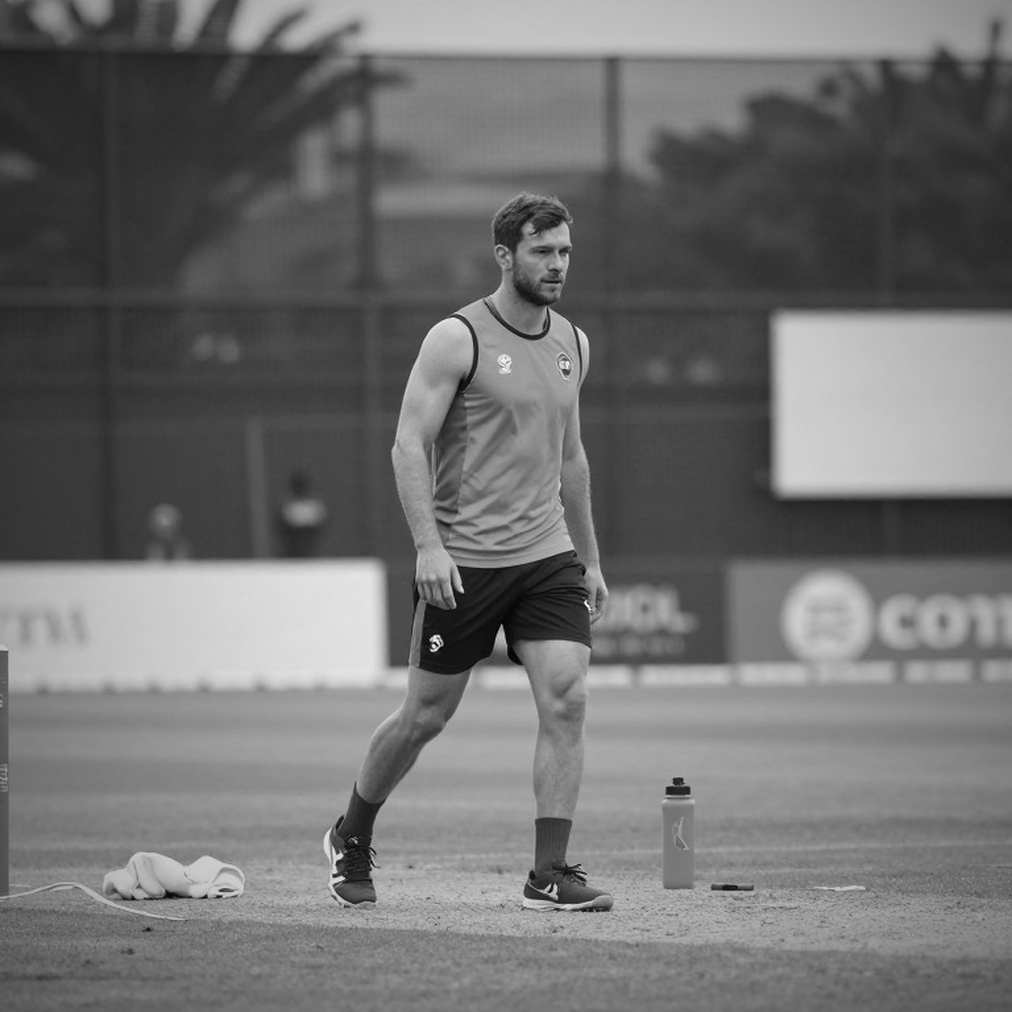
Then came 85 with captain Lachlan Shaw (44) and another 82 with Jack Edwards (45). Three partnerships worth 248 runs, and in all three Konstas was the constant. That is a skill in itself: partners changed, bowlers changed, the required rate changed, and the man at first slip's edge of vision stayed exactly where he was.
Standing through 248 runs across three different partnerships is as meaningful as the 149 itself — it says he was adjusting to the pitch and the situation rather than holding one tempo out of stubbornness.
New South Wales reached 371, their second-highest total ever in the format. Konstas brought up his second List A century off 106 balls, and what followed was the second life of the innings — 49 from 25.
First life: fifty off 59 balls, including a six. No discomfort, no hurry. That is the hardest passage of any innings, because at the WACA survival in the first twenty overs makes scoring easier later. The catch is that you have to survive them.
Second life: the next fifty runs took 47 balls. This is the least photogenic and most useful stretch of any one-day innings. This is where the 81, 85 and 82 were built. The middle of a fifty-over innings is the room no live camera visits, and it is the room where games are decided.
Third life: 49 off 25. This is the passage that will be clipped and replayed on Monday. The freedom that arrives after a hundred is psychological rather than technical. NSW were somewhere near 300, and Konstas falling in the 47th over cost more than the scorecard will ever admit.
In modern limited-overs cricket the most valuable skill is not how quickly you can reach fifty. It is whether you can reach fifty in 59 balls and then add 49 more off 25 in the same innings — two entirely different jobs, one afternoon.
The boundary ledger: fifteen fours and four sixes account for 84 runs. The other 65 came running, across 112 balls, in twos to deep midwicket and in sprints that cost a batsman his breathing. The WACA's straight boundaries are long and its square ones short; a batsman who knows how to find the square gaps doubles his yield here. Konstas did exactly that, and at his age that is not instinct, it is intelligence.
His Test record has an odd shape. A Boxing Day debut at Melbourne in December 2026, that 60 against Jasprit Bumrah which turned a country's head towards a teenager. Then nine innings and 103 runs. Then out. He has not played for Australia since the West Indies tour last July.
This month began with 67 in the second unofficial ODI against India A in Puducherry. Then 71 and 151 not out for NSW against Western Australia in the Sheffield Shield at this same ground. Now 149 in the One-Day Cup at the same venue. Four consecutive scores above fifty. That is a sequence a selection panel cannot ignore even if it wants to.
The team's needs point the same way. Nic Maddinson is struggling on his return in South Africa. Marnus Labuschagne's difficult run continues. David Warner said plainly last week, after the Shield hundred, that Konstas should bat at No.3 for Australia. A home Test series against New Zealand is about to be named. In that triangle of names, one is rising and two are sinking.
The Monday after the final is where the real story begins. I started a Monday letter because Sunday's story never gets told by Monday morning. This match has its own Sunday night: the Western Australia bowlers who conceded 371. For whichever young quick was among them, that figure will be written on the back of his career in permanent ink, and nobody will remember, next time he takes the new ball, that the innings changed gears twice.
October pitches at the WACA help bowlers less than reputation suggests — the ball comes on, the bounce is honest, and after lunch the Fremantle Doctor sweeps across the ground. Part of what we are calling a 149 is weather. Selectors should remember that. So should we.
The crisis at the top of Australia's order, in its simplest telling, is about runs not being made. The crisis as it actually exists is about runs being made in a tempo the innings does not need at 2pm. Labuschagne's issue was never the tally; it was his state of mind at the moment the ball is released. No.3 is not a queue you wait in. It is the place where a match's mood is set. So the 149 is a very good argument for Konstas and a very poor piece of evidence.
A white-ball innings on an October WACA deck is a truth about a white-ball pitch; a red-ball morning against New Zealand is a different weather system — treating the two as one currency is the oldest habit of the domestic calendar. When the clouds settle over the Basin Reserve, the new ball swings for four overs, and what a No.3 does then is not scoring, it is surviving. Konstas has that skill; the 151 not out in the Shield is the proof. It is simply not the proof being waved around loudest.
Warner's endorsement is the noisiest and lightest part of this debate. A retired superstar's blessing is excellent broadcast material and has no seat in the selection room. Its effect is that Konstas gets a platform no other twenty-year-old receives, and that asymmetry is the real story — which player gets an army of voices behind him depends on which day he happens to make a hundred while someone is on commentary. The selection room is not a spreadsheet; it is a corridor of whispers.
And the part nobody will write: using a 50-over domestic score as evidence in a Test debate is a failure of the domestic calendar, not a proof of a batsman's quality. This tournament is played in September and October in front of empty seats, with more scorecards than cameras. Its innings get lifted into Test arguments because the selectors have no other window to watch through. In that arrangement, 371 says something about a batting side and something else about the young bowler who conceded it, and we only ever hear the first voice. Some matches are loudest in the silence nobody recorded.
Konstas's first innings reminds me of that night in Kazan, when a nineteen-year-old began a run inside his own half and a stadium forgot to breathe. I wrote it then and still believe it: follow the kid running from his own half, because that is where the future starts. The other truth of that night is that for four years afterwards he was asked to reproduce the same run in every match, and did not.
That is the warning attached to Konstas. Every grand innings leaves a second match playing in the memory — those nine innings, those 103 runs, that quiet dropping. Everyone recalls the 60 against Bumrah; nobody remembers what came after. Collective memory keeps a player's best day and files his worst days under someone else's name.
The strongest case for Konstas is not the 149. It is the 151 not out — Sheffield Shield, same ground, red ball, long innings. That is the item a selector can use. The 149 is the item a newspaper will carry. Selection is usually swayed by whatever the newspaper carries. That is the oldest tragedy of domestic cricket.
When the New Zealand squad is named, three things will be worth watching. Whether the panel weighs the 149 or the 151 — both belong to the same man, and they do not carry the same weight. Who makes way, because bringing Konstas in always means sending someone out, and nobody writes a Monday letter for the man sent out. And whether, if he edges to slip two or three times at the Basin Reserve against the new ball, the same system that lifted him this fast will put him down just as fast.
The WACA stands were emptying by six. The groundstaff brought the roller onto the outfield and Konstas's bat was going back into the bag. His work was done. The selectors' work is not. And the next time he walks out, that question will stand beside him like a partner at the other end — who bats at No.3?